To scale a recipe, calculate a scaling factor = desired yield ÷ original yield, then multiply each ingredient by it. But salt, strong spices, leavening, thickeners and alcohol do not scale linearly — hold them back to roughly 75–90% at large multiples and adjust to taste. Cooking time, pan size and evaporation also change with batch size, so never assume a doubled recipe simply takes twice as long.
Start with the scaling factor
Every scaled recipe begins with one number: the scaling factor = desired yield ÷ original yield. A recipe for 10 portions that you need to make for 35 has a factor of 3.5. Multiply each ingredient quantity by 3.5 and you have your first draft.
Working from portions is cleaner than working from "double it" or "half it," because it forces you to define the actual output you need — which is also the number your recipe costing and prep list depend on.
What scales linearly — and what absolutely does not
Bulk ingredients scale cleanly: rice, flour, chicken, vegetables, stock, oil. Multiply and move on. The trouble is everything that punches above its weight:
- Salt and strong spices. Flavour compounds concentrate as volume grows. Doubling chilli or garam masala often overshoots. At 2× start with about 90% of the scaled amount; at 4×+ start nearer 75% and correct by tasting.
- Leavening (baking soda, powder, yeast). Scales unreliably and can collapse or over-rise a large batch. Adjust cautiously and test.
- Thickeners (cornflour, roux, cream reductions). A bigger pot loses proportionally less liquid to evaporation, so scaled thickeners can leave a batch gluey. Add gradually to consistency.
- Alcohol and acids. Take longer to cook off in volume; scale down slightly.
The equipment and time reality nobody warns you about
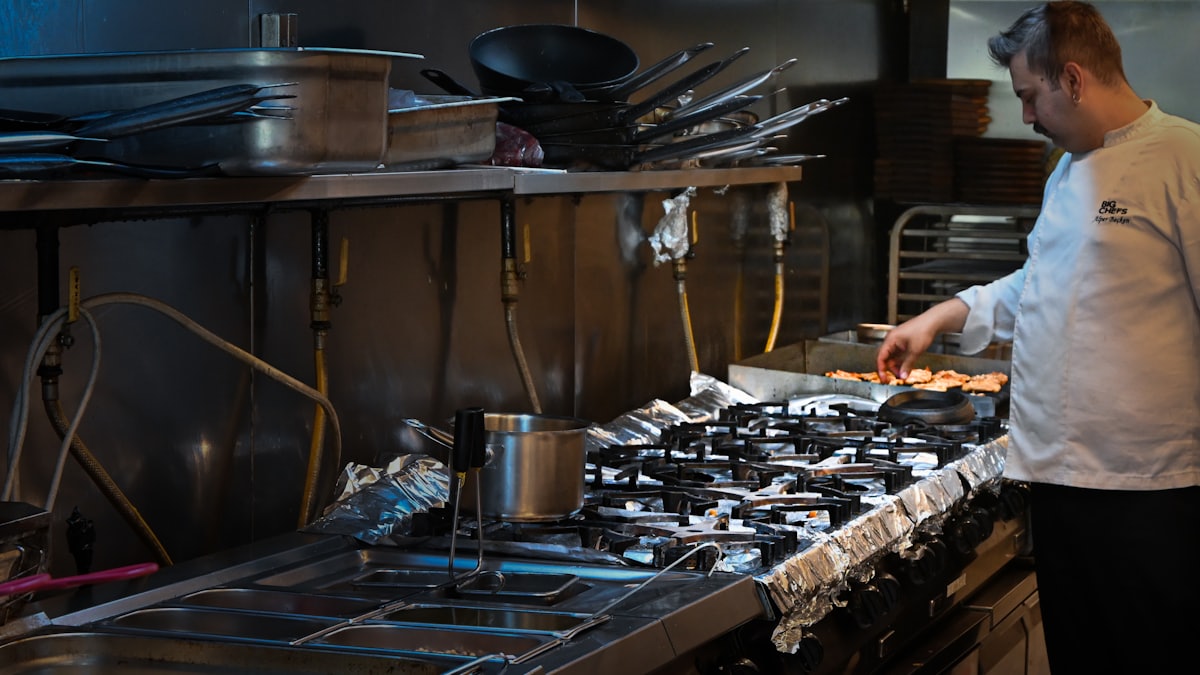
A recipe is written for a certain pan and heat. Scale the ingredients 4× and the same burner cannot behave the same way. Bigger batches take longer to come to temperature, cook unevenly if the pot is too deep, and — critically — cool much more slowly, which is a food-safety risk for large volumes of rice, gravies and dairy.
Assume time changes non-linearly. A doubled braise might take 1.3×, not 2×, the original time; a quadrupled one might need splitting across two vessels. Judge by doneness and temperature, never by the original clock.
Re-check the cost when you scale
Scaling can quietly change your economics. Buying in larger quantities may unlock a better supplier rate (good), but bigger batches also risk more wastage if you over-produce and the extra portions do not sell. Re-run the scaled recipe through costing so the price-per-portion still holds, and only scale to the volume you can realistically sell before quality drops.
Batch Scaling Calculator
Scale any recipe up or down for banquets and events. Enter ingredients once, get every quantity recalculated for the new guest count.
Step by step
Scale any recipe in five steps.
- Calculate the scaling factor. Divide the yield you need by the recipe’s original yield.
- Multiply the bulk ingredients. Apply the factor to all main, freely-scaling ingredients.
- Hold back strong seasonings. Start salt, spices, leavening and thickeners at 75–90% of the scaled amount and adjust by tasting.
- Adjust equipment and time. Use appropriately sized vessels, split batches if needed, and judge doneness by temperature, not the original time.
- Re-cost and write it down. Confirm the per-portion cost still works and record the scaled recipe as a new standard.
Frequently asked questions
How do I double a recipe correctly?
Multiply the bulk ingredients by two, but start salt, strong spices, leavening and thickeners at about 90% of the doubled amount and adjust to taste. Cooking time will not simply double — judge by doneness and temperature.
Why does doubling the salt or spice taste too strong?
Flavour and seasoning compounds concentrate as volume increases and are perceived non-linearly. Scaling them at full multiple usually overshoots, which is why you hold them back and correct by tasting.
Does cooking time scale with the recipe?
No. Larger batches take longer to heat and cool but rarely in direct proportion. A doubled dish might need only 1.3× the time; always judge by internal temperature and doneness rather than multiplying the clock.
Keep reading
How to Cost a Recipe and Price a Plate: The Indian Restaurant Guide
A step-by-step guide to costing any recipe ingredient-by-ingredient, finding your true cost per portion, and setting a menu price at the food-cost % you actually want.
Portion Control and Yield: The Margin Your Kitchen Loses Without Noticing
How yield percentage and portion control quietly decide your food cost — what trim loss really costs, how to calculate edible yield, and how to standardise portions.