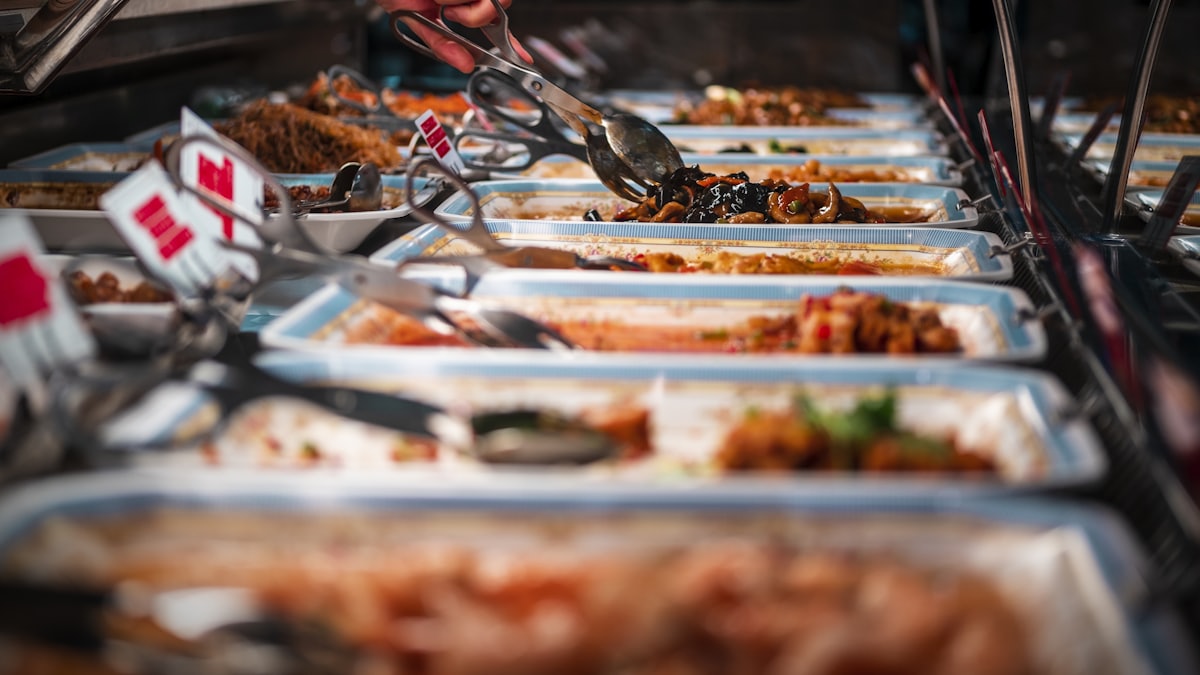
Neither model is universally better — it depends on your covers, wastage and labour. A buffet trades a higher food-cost percentage and more wastage for high covers, fast turnover and low per-cover service labour. À la carte runs a tighter food cost and less waste but needs more kitchen and service labour per cover and turns tables slower. Model both with your real numbers: buffet usually wins on volume-driven days, à la carte on margin per cover.
Two different money machines
Buffet and à la carte are not just different ways to serve food — they are different businesses with different cost structures, and comparing them on food cost alone misleads. A buffet's economics live on volume and turnover; an à la carte kitchen's live on margin per plate. The right question is not "which has lower food cost" but "which makes more profit for my covers, space and labour."
The buffet trade-off
Buffets run a higher food-cost percentage and more wastage by design — you cook to a spread, not to orders, and some of it will not be eaten. What you get in return is powerful: high covers, fast table turnover, a fixed price that simplifies operations, and low per-cover service labour because guests serve themselves. On a busy day, volume overwhelms the higher food cost and the buffet wins comfortably. On a slow day, the wastage bites and it can lose money fast — buffets are unforgiving of low footfall.
The à la carte trade-off
À la carte flips it. You cook to order, so food cost is tighter and wastage lower — you are not producing food nobody ordered. But you pay for it in labour: more skilled kitchen hands cooking each dish to order, more service staff per cover, and slower turnover as guests order, wait and dine at their own pace. À la carte earns its keep on margin per cover and works when the average spend and service justify the labour.
How to decide (and why "both" is common)
Model each with your real numbers — covers, average spend, food cost, wastage and labour — and compare the profit, not the food-cost percentage. Many restaurants land on a hybrid: buffet for high-volume slots (weekday lunch, brunch) where footfall is reliable, à la carte for dinner where guests want choice and will pay for it. The model is a lever, not a religion; run the maths for your actual demand pattern and let the numbers, not the trend, decide.
Buffet vs À la Carte Comparison
Compare the profit of serving an event as a buffet versus à la carte from covers, pricing and cost per format. Decide with numbers, not habit.
Step by step
Compare the two models for your restaurant.
- Estimate covers for each model. Buffets turn faster and seat more; à la carte turns slower — use realistic numbers for your space.
- Work out food cost and wastage for each. Buffet runs higher food cost and more waste; à la carte lower on both.
- Add the labour each needs. Buffet uses less per-cover service labour; à la carte needs more skilled kitchen and floor staff.
- Compare profit, not food-cost %. Multiply out covers × average spend minus costs for each, and let total profit decide — or split by daypart.
Frequently asked questions
Is a buffet or à la carte more profitable?
It depends on your covers, wastage and labour. Buffets win on high-volume days through fast turnover and low per-cover service labour despite a higher food cost; à la carte wins on margin per cover when average spend and service justify the extra labour. Model both with your real numbers.
Why does a buffet have a higher food cost?
Because you cook to a spread rather than to orders, so you produce more than is eaten and some is wasted. Buffets accept a higher food-cost percentage in exchange for high covers, fast turnover and a simple fixed price.
Can a restaurant run both models?
Yes, and many do — buffet for reliable high-volume slots like weekday lunch or brunch, and à la carte for dinner when guests want choice and will pay for it. Splitting by daypart captures the strength of each.
Keep reading
Table Turnover: The Hidden Lever on Restaurant Revenue
What table turnover is, how to calculate it, why it quietly caps your revenue, and how to turn tables faster without ever rushing a guest.
Food Cost Percentage: The Number That Quietly Decides Your Month
What food cost percentage is, how to calculate it with a stock-take, the benchmark bands for Indian restaurants and cloud kitchens, and why weekly beats monthly.